Applied physics across generations: Cultivating scientific curiosity through health and energy applications
DOI:
https://doi.org/10.53088/penamas.v6i3.3602Keywords:
Medical Physics, Science Education, Healthcare Technology, Student Motivation, Interdisciplinary LearningAbstract
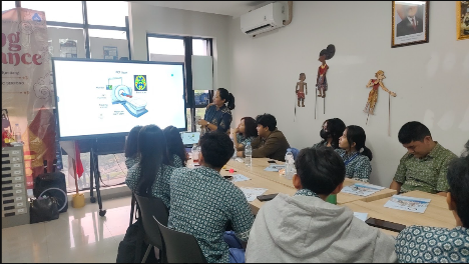
Physics is frequently regarded by students as an abstract and challenging subject, disconnected from everyday experience, which often results in low motivation and limited engagement across different levels of science education. As a continuation of our previous community service program on medical physics education, this second initiative extends the same approach to students at Jaya Plus Montessori School. The program aims to demonstrate that physics is not merely theoretical but plays a vital role in real-world applications, particularly in medicine, including radiology, MRI, CT scans, and radiation therapy for cancer treatment. This study employed a one-group pretest- posttest design conducted through a collaboration between Matana University and the school, involving high school students. The workshop combines a scientific talk on medical physics applications, a session on quantum physics and material science presented by a guest speaker from the National Research and Innovation Agency (BRIN), and hands-on physics demonstrations to make learning both contextual and engaging. Students are also introduced to career pathways in medical physics, such as medical physicist, radiographer, radiation therapist, and biomedical engineer, which are often overlooked in favor of more familiar healthcare professions. Pre- and post-tests are used to evaluate changes in students' understanding and interest before and after the activity.
References
Anderson, L. W., & Krathwohl, D. R. (2001). A Taxonomy for Learning, Teaching and Assessing: A Revision of Bloom’s Taxonomy of Educational Objectives: Complete Edition. New York: Longman.
Budiman, R., Sinaga, E. P. ., & Gloria, Y. Y. . (2025). Eksperimen Interaktif Pengukuran Waktu Reaksi Manusia Di Sma Stella Maris School BSD. Jurnal Abdimas Bina Bangsa, 6(2), 1409-1413. https://doi.org/10.46306/jabb.v6i2.1904
Bushberg, J. T., Seibert, J. A., Leidholdt, E. M., & Boone, J. M. (2012). The essential physics of medical imaging (3rd ed.). Lippincott Williams & Wilkins.
Dimitrov, D. M., & Rumrill, P. D., Jr. (2003). Pretest-posttest designs and measurement of change. Work, 20(2), 159–165. https://doi.org/10.3233/WOR-2003-00285
Franco, A., Shaker, M., Kalubi, D., & Hostettler, S. (2017). A review of sustainable energy access and technologies for healthcare facilities in the Global South. Sustainable Energy Technologies and Assessments, 22, 92–105. https://doi.org/10.1016/j.seta.2017.02.022
Freeman, S., Eddy, S. L., McDonough, M., Smith, M. K., Okoroafor, N., Jordt, H., & Wenderoth, M. P. (2014). Active learning increases student performance in science, engineering, and mathematics. Proceedings of the National Academy of Sciences, 111(23), 8410–8415. https://doi.org/10.1073/pnas.1319030111
Ghosh, N., & Vitkin, I. A. (2011). Tissue polarimetry: Concepts, challenges, applications, and outlook. Journal of Biomedical Optics, 16(11), 110801. https://doi.org/10.1117/1.3652896
Hake, R. R. (1998). Interactive-Engagement vs. Traditional Methods: A Six-Thousand-Student Survey of Mechanics Test Data for Introductory Physics Courses. American Journal of Physics, 66, 64. http://dx.doi.org/10.1119/1.18809
Hidi, S., & Renninger, K. A. (2006). The four-phase model of interest development. Educational Psychologist, 41(2), 111–127. https://doi.org/10.1207/s15326985ep4102_4
Hofstein, A., & Lunetta, V. N. (2004). The laboratory in science education: Foundations for the twenty-first century. Science Education, 88(1), 28–54. https://doi.org/10.1002/sce.10106
International Atomic Energy Agency. (2013). Roles and responsibilities, and education and training requirements for clinically qualified medical physicists (IAEA Human Health Series No. 25). International Atomic Energy Agency.
International Baccalaureate Organization. (n.d.). How the PYP works. https://www.ibo.org/programmes/primary-years-programme/how-the-pyp-works/
Keller, M. M., Neumann, K., & Fischer, H. E. (2017). The impact of physics teachers' pedagogical content knowledge and motivation on students' achievement and interest. Journal of Research in Science Teaching, 54(5). https://doi.org/10.1002/tea.21378
Kementerian Kesehatan Republik Indonesia. (2015). Peraturan Menteri Kesehatan Republik Indonesia Nomor 83 Tahun 2015 tentang Standar Pelayanan Fisika Medik (Berita Negara Republik Indonesia Tahun 2015 Nomor 2012). Kementerian Kesehatan Republik Indonesia.
Khan, F. M., & Gibbons, J. P. (2014). Khan's the physics of radiation therapy (5th ed.). Lippincott Williams & Wilkins.
Krathwohl, D. R. (2002). A revision of Bloom’s taxonomy: An overview. Theory Into Practice, 41(4), 212–218. https://doi.org/10.1207/s15430421tip4104_2
McRobbie, D. W., Moore, E. A., Graves, M. J., & Prince, M. R. (2017). MRI from picture to proton (3rd ed.). Cambridge University Press. https://doi.org/10.1017/9781107706958
Osborne, J., Simon, S., & Collins, S. (2003). Attitudes towards science: A review of the literature and its implications. International Journal of Science Education, 25(9), 1049–1079. https://doi.org/10.1080/0950069032000032199
Sinaga, E. P., Budiman, R., Nurdin, M. A., Manik, J. T., & Hasdeo, E. H. (2026). Introduction to medical physics: Bridging physics and healthcare. Penamas: Journal of Community Service, 6(1), 37–45. https://doi.org/10.53088/penamas.v6i1.2585
Tai, R. H., Liu, C. Q., Maltese, A. V., & Fan, X. (2006). Planning early for careers in science. Science, 312(5777), 1143–1144. https://doi.org/10.1126/science.1128690
Downloads
Published
How to Cite
Issue
Section
License
Copyright (c) 2026 Evelyn Pratami Sinaga, Rizki Budiman, Jonathan P Satya, Grace V Priskila, Josua T Manik, Eddwi H Hasdeo

This work is licensed under a Creative Commons Attribution-ShareAlike 4.0 International License.
Authors who publish with this journal agree to the following terms:
The author(s) retain copyright and grant the journal the right of first publication with the work simultaneously licensed under a CC BY-SA 4.0 license that allows others to remix, adapt, and build upon the work even for commercial purposes, as long as they credit the author(s) and license their new creations under the identical terms.
License details: https://creativecommons.org/licenses/by-sa/4.0/
Most read articles by the same author(s)
- Evelyn Pratami Sinaga, Rizki Budiman, M. Arif Nurdin, Josua T. Manik, E. H. Hasdeo, Introduction to medical physics: Bridging physics and healthcare , Penamas: Journal of Community Service: Vol. 6 No. 1 (2026): Penamas: Journal of Community Service
- Rizki Budiman, Evelyn Pratami Sinaga, Grace Vanya Priskila, Josua Timotius Manik, Muhamad Arif Nurdin, Implementasi eksperimen self-singing pipe sebagai media pembelajaran fisika bagi siswa SMA Jaya Plus Montessori , Penamas: Journal of Community Service: Vol. 6 No. 3 (2026): Penamas: Journal of Community Service


