Pemetaan minat vokasional RIASEC dan kepribadian TIPI sebagai strategi optimalisasi konsep diri mahasiswa baru program studi promosi kesehatan
DOI:
https://doi.org/10.53088/penamas.v6i3.3354Keywords:
Health Promotor, Potential Mapping, Vocational Interest, Personality InventoryAbstract
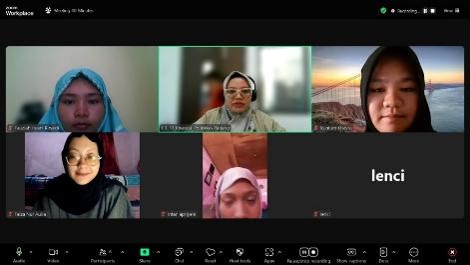
New students of the Bachelor of Applied Health Promotion Program at Poltekkes Kemenkes Padang frequently encounter vocational anxiety and a negative fixed mindset regarding the compatibility of their personal characteristics with the health promoter role. This community service project aimed to optimize students' self-concept through a psychological potential mapping program based on self-assessments using the RIASEC Vocational Interest Questionnaire and the Ten-Item Personality Inventory (TIPI). The activity was carried out through a digital assessment of 130 new students and continued with an interactive psychoeducational seminar. Results showed that the social type dominated vocational interest profiles (40.0%), followed by Investigative (26.9%), indicating strong alignment with health promotion competency demands. Personality profiles revealed the highest scores in Conscientiousness and Agreeableness. Impact evaluation demonstrated a significant increase in students' understanding of the five core health promoter graduate profiles. Additionally, 99.1% of participants reported that the activity successfully strengthened their professional self-confidence. In conclusion, this integrated interest and personality mapping intervention effectively optimized students' self-concept.
References
Akhtar, H. (2018). Translation and validation of the Ten-Item Personality Inventory (TIPI) into Bahasa Indonesia. International Journal of Research Studies in Psychology, 7(2). https://doi.org/10.5861/ijrsp.2018.3009
Beaton, D. E., Bombardier, C., Guillemin, F., & Ferraz, M. B. (2000). Guidelines for the Process of Cross-Cultural Adaptation of Self-Report Measures. Spine, 25(24), 3186–3191. https://doi.org/10.1097/00007632-200012150-00014
Biehl, V., Bänziger, A., & Wieber, F. (2025). A longitudinal study on the professional identity formation of health promotion practitioners: evidence from undergraduate students in Switzerland. Frontiers in Medicine, 12. https://doi.org/10.3389/fmed.2025.1491467
Bullock-Yowell, E. (2024). Holland’s RIASEC Hexagon: A Paradigm for Life and Work Decisions. Florida State Open Publishing. https://doi.org/10.33009/fsop_bullock-yowell0524
Cornett, M., Palermo, C., & Ash, S. (2023). Professional identity research in the health professions—a scoping review. Advances in Health Sciences Education, 28(2), 589–642. https://doi.org/10.1007/s10459-022-10171-1
Dweck, C. S.(2016). Mindset : the new psychology of success. Ballantine Books.
Ferrari, M., Allan, S., Arnold, C., Eleftheriadis, D., Alvarez-Jimenez, M., Gumley, A., & Gleeson, J. F. (2022). Digital Interventions for Psychological Well-being in University Students: Systematic Review and Meta-analysis. Journal of Medical Internet Research, 24(9), e39686. https://doi.org/10.2196/39686
Gosling, S. D., Rentfrow, P. J., & Swann, W. B. (2003). A very brief measure of the Big-Five personality domains. Journal of Research in Personality, 37(6), 504–528. https://doi.org/10.1016/S0092-6566(03)00046-1
Guan, Y., Deng, H., Fan, L., & Zhou, X. (2021). Theorizing person-environment fit in a changing career world: Interdisciplinary integration and future directions. Journal of Vocational Behavior, 126, 103557. https://doi.org/10.1016/j.jvb.2021.103557
Hanna, A., & Rounds, J. (2020). How accurate are interest inventories? A quantitative review of career choice hit rates. Psychological Bulletin, 146(9), 765–796. https://doi.org/10.1037/bul0000269
Hoff, K. A., Briley, D. A., Wee, C. J. M., & Rounds, J. (2018). Normative changes in interests from adolescence to adulthood: A meta-analysis of longitudinal studies. Psychological Bulletin, 144(4), 426–451. https://doi.org/10.1037/bul0000140
Johnston, C. S. (2018). A Systematic Review of the Career Adaptability Literature and Future Outlook. Journal of Career Assessment, 26(1), 3–30. https://doi.org/10.1177/1069072716679921
Louwen, C., Reidlinger, D., & Milne, N. (2023). Profiling health professionals’ personality traits, behaviour styles and emotional intelligence: a systematic review. BMC Medical Education, 23(1), 120. https://doi.org/10.1186/s12909-023-04003-y
Nabi, G., Walmsley, A., Mir, M., & Osman, S. (2025). The impact of mentoring in higher education on student career development: a systematic review and research agenda. Studies in Higher Education, 50(4), 739–755. https://doi.org/10.1080/03075079.2024.2354894
Nye, C. D., Su, R., Rounds, J., & Drasgow, F. (2017). Interest congruence and performance: Revisiting recent meta-analytic findings. Journal of Vocational Behavior, 98, 138–151. https://doi.org/10.1016/j.jvb.2016.11.002
Panadero, E., Jonsson, A., & Botella, J. (2017). Effects of self-assessment on self-regulated learning and self-efficacy: Four meta-analyses. Educational Research Review, 22, 74–98. https://doi.org/10.1016/j.edurev.2017.08.004
Politeknik Kesehatan Kementerian Kesehatan Padang. (2025). Profil Jurusan Promosi Kesehatan Poltekkes Kemenkes Padang.
Rachmawati, D., Sahid, S., Mahmud, M. I., & Buang, N. A. (2024). Enhancing student career readiness: a two-decade systematic literature review. International Journal of Evaluation and Research in Education (IJERE), 13(3), 1301. https://doi.org/10.11591/ijere.v13i3.26485
Rahayu, E., Widayanti, C. G., & Sawitri, D. R. (2024). Career Decision-Making Self-Efficacy among Undergraduate Students in Collectivistic Contexts: A Scoping Review. Journal of Educational, Health and Community Psychology, 13(2), 358. https://doi.org/10.12928/jehcp.v13i2.27855
Stoll, G., Rieger, S., Lüdtke, O., Nagengast, B., Trautwein, U., & Roberts, B. W. (2017). Vocational interests assessed at the end of high school predict life outcomes assessed 10 years later over and above IQ and Big Five personality traits. Journal of Personality and Social Psychology, 113(1), 167–184. https://doi.org/10.1037/pspp0000117
Umucu, E., Granger, T., Choi, H., & Degeneffe, C. E. (2025). Unveiling the Vocational Tapestry: Personality Types and Career Interests Among Student Veterans in Rehabilitation Counseling Master’s Programs. Journal of Vocational Rehabilitation, 63(1), 77–82. https://doi.org/10.1177/10522263251337629
Vashisht, S., Kaushal, P., & Vashisht, R. (2023). Emotional intelligence, Personality Variables and Career Adaptability: A Systematic Review and Meta-analysis. Vision: The Journal of Business Perspective, 27(3), 316–328. https://doi.org/10.1177/0972262921989877
Wu, H., Guo, Y., Yang, Y., Zhao, L., & Guo, C. (2021). A Meta-analysis of the Longitudinal Relationship Between Academic Self-Concept and Academic Achievement. Educational Psychology Review, 33(4), 1749–1778. https://doi.org/10.1007/s10648-021-09600-1
Zhang, Q., Amat, S., Omar, M., & Mansor, A. Z. (2025). Predictors of Career Adaptability among Chinese Higher Education Students: A Systematic Literature Review. International Journal of Learning, Teaching and Educational Research, 24(8), 1–20. https://doi.org/10.26803/ijlter.24.8.1
Downloads
Published
How to Cite
Issue
Section
License
Copyright (c) 2026 Risanita Fardian Farid, Welan Mauli Angguna, Yuni Fatimatizzahro, Erick Zicof, Evi Maria Lestari Silaban

This work is licensed under a Creative Commons Attribution-ShareAlike 4.0 International License.
Authors who publish with this journal agree to the following terms:
The author(s) retain copyright and grant the journal the right of first publication with the work simultaneously licensed under a CC BY-SA 4.0 license that allows others to remix, adapt, and build upon the work even for commercial purposes, as long as they credit the author(s) and license their new creations under the identical terms.
License details: https://creativecommons.org/licenses/by-sa/4.0/


