Community empowerment through training on production and marketing communication of local food-based chips
DOI:
https://doi.org/10.53088/penamas.v6i3.3231Keywords:
Local Food Processing, Entrepreneurship Training, Marketing Communication, Digital Marketing, Chips ProductionAbstract
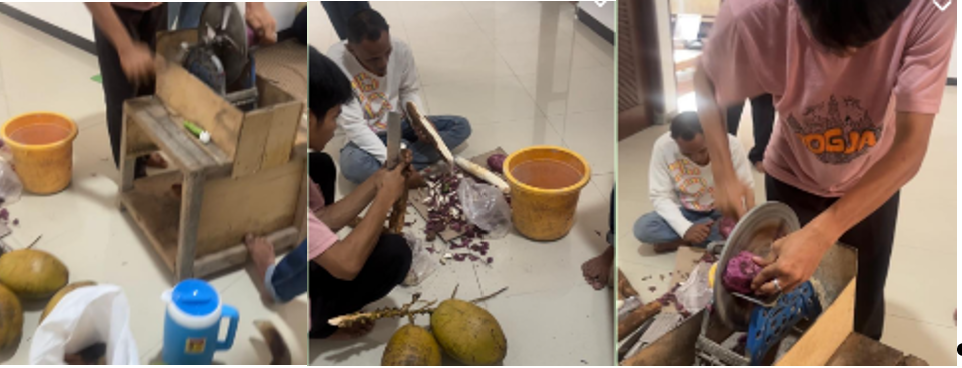
This community service program aimed to empower unemployed community members in Kota Serang Baru, Banten, through integrated training on the production and marketing communication of local food-based chips made from cassava, sweet potatoes, and bananas. The program was implemented over three days (17–19 May 2026) using a participatory, experiential, and practitioner-based training approach involving 17 participants. The training combined production skills development, packaging and branding improvement, and digital marketing communication strategies to strengthen participants’ entrepreneurial capacity. The evaluation results show a significant improvement in participant competencies. The pre-test results indicated a very low initial capability level of 5%, reflecting limited knowledge and skills in food processing and marketing. After the training intervention, the post-test results increased significantly to 94%, demonstrating substantial improvement in both technical and marketing competencies. Participants also showed improved ability in hygienic production practices, product packaging, branding, and social media-based marketing.
References
Ainin, S., Parveen, F., Moghavvemi, S., Jaafar, N. I., & Mohd Shuib, N. L. (2015). Factors influencing the use of social media by SMEs and its performance outcomes. Industrial Management & Data Systems, 115(3), 570–588. https://doi.org/10.1108/IMDS-07-2014-0205
Anderson, N., Potočnik, K., & Zhou, J. (2014). Innovation and Creativity in Organizations. Journal of Management, 40(5), 1297–1333. https://doi.org/10.1177/0149206314527128
Anisariza, N. U., Purwaningsih, E., Basrowi, B., & Ventayen, R. J. M. (2025). Legal Protection Model for Superior Village Products Based on Digital Transformation and the Role of Village-Owned Enterprise (BUMDes). Law Reform, 21(2), 444–481. https://doi.org/10.14710/lr.v21i2.66142
Anjarany, S., & Marianti, M. M. (2026). Organizational Culture and Work Stress as Determinants of Employee Job Satisfaction. Studi Ilmu Manajemen Dan Organisasi, 7(1), 99–110. https://doi.org/10.35912/simo.v7i1.5412
Berkat, Setinawati, & Basrowi. (2025). The role of educational management in enhancing innovation and problem-solving competencies for students towards global competitiveness: A literature review. Social Sciences & Humanities Open, 11(1), 101280. https://doi.org/10.1016/j.ssaho.2025.101280
Chambers, R. (1994). Participatory rural appraisal (PRA): Challenges, potentials and paradigm. World Development, 22(10), 1437–1454. https://doi.org/10.1016/0305-750X(94)90030-2
Cuevas-Vargas, H., Cortés-Palacios, H. A., & Lozano-García, J. J. (2021). Impact of capital structure and innovation on firm performance. Direct and indirect effects of capital structure. Procedia Computer Science, 199, 1082–1089. https://doi.org/10.1016/j.procs.2022.01.137
Dahlan, A., Shafia, M. H. M., Tatung, T., & Basrowi, B. (2025). Digital transformation: The role of AI, social dynamics, and political support on the quality of strategic decisions and their implications for the progress of Islamic banking in Malaysia and Indonesia. International Journal of Data and Network Science, 9(3), 701–706. https://doi.org/10.5267/j.ijdns.2024.6.011
Daud, D., & Gusnita, A. (2026). Implementation of Prevention and Investigation Programs in Organizational Oversight. Studi Ilmu Manajemen Dan Organisasi, 7(1), 405–415. https://doi.org/10.35912/simo.v7i1.6369
Deku, W. A., Wang, J., & Preko, A. K. (2024). Digital marketing and small and medium-sized enterprises’ business performance in emerging markets. Asia Pacific Journal of Innovation and Entrepreneurship, 18(3), 251–269. https://doi.org/10.1108/APJIE-07-2022-0069
Faeni, D. P., Faeni, R. P., Basrowi, & Riyadh, H. A. (2026). GHRM in aviation healthcare industry for emissions reduction mediated by corporate culture. Social Sciences & Humanities Open, 13, 102430. https://doi.org/10.1016/j.ssaho.2025.102430
Faeni, D. P., Faeni, R. P., Basrowi, & Sungkono. (2025). Green HRM for sustainable aviation: An integration evaluation using PLS-SEM and fsQCA. Environmental Challenges, 20, 101232. https://doi.org/10.1016/j.envc.2025.101232
Fauzi, Basrowi, Wulandari, & Irviani, R. (2025). Fostering sustainability through leadership and employee personality traits. Sustainable Futures, 9(1), 1–12. https://doi.org/10.1016/j.sftr.2025.100502
Fauzi, F., Effendi, R., & Basrowi, B. (2024). Utilization of big data and cloud computing platforms for the smooth processing of financial ac-counting system data and its implications for the success of village development. International Journal of Data and Network Science, 8(3), 2015–2028. https://doi.org/10.5267/j.ijdns.2024.1.012
Foltean, F. S., Trif, S. M., & Tuleu, D. L. (2019). Customer relationship management capabilities and social media technology use: Consequences on firm performance. Journal of Business Research, 104, 563–575. https://doi.org/10.1016/j.jbusres.2018.10.047
Hasibuan, R. R., Suliyanto, S., & Novandari, W. (2026). Using Social Media Marketing to Improve Marketing Performance: The Role of Digital Customer-Centric Intimacy Capability. Studi Ilmu Manajemen Dan Organisasi, 7(1), 1–20. https://doi.org/10.35912/simo.v7i1.6325
Huo, D., Zheng, Q., & Pei, L. (2023). Investigating the Characteristics of Urban Comprehensive Hospitals from a Supply–Demand Balance Perspective: A Case Study of Three Districts in Shenzhen Based on Multi-Source Data. Sustainability, 15(4), 3327. https://doi.org/10.3390/su15043327
Junedia, B., Basrowib, Yendraa, N., Muharomaha, D. R., Putria, V. K., Maliki, B. I., Umalihayatia, & Baqi, F. A. (2024). IT-based learning innovation and critical thinking skills concerning students’ mastery of materials and their implications on academic achievement. International Journal of Data and Network Science, 8(3), 1999–2014. https://doi.org/10.5267/j.ijdns.2024.1.013
Kolb, D. A. (1984). Experiential Learning: Experience As The Source Of Learning And Development. Prentice Hall.
Kraus, S., Breier, M., & Dasí-Rodríguez, S. (2020). The art of crafting a systematic literature review in entrepreneurship research. International Entrepreneurship and Management Journal, 16(3), 1023–1042. https://doi.org/10.1007/s11365-020-00635-4
Shahzad, F., Poudel, D., & Ferreira, J. J. (2026). Innovation as a resilience-building strategy in micro-, small-, and medium-sized enterprises: An interpretative phenomenological analysis. The International Journal of Entrepreneurship and Innovation, 1–19. https://doi.org/10.1177/14657503261421099
Sukidin, Fajarwati, L., Dienda Saputri, S. W., & Basrowi. (2026). Optimization of project-based learning: Fostering proactive and collaborative behavior for a sustainable future. Social Sciences & Humanities Open, 13, 102735. https://doi.org/10.1016/j.ssaho.2026.102735
Suseno, B. D., Kartika, D., & Basrowi. (2026). The Role of Social Problem of Auditee as a Predictor of Compliance and the Follow-Up on Auditor Findings. Account and Financial Management Journal, 11(5), 4472–4479. https://doi.org/10.47191/afmj/v11i5.05
Downloads
Published
How to Cite
Issue
Section
License
Copyright (c) 2026 Abdur Rahman Irsyadi, Atik Budi Paryanti, Rahmadiana Rahmadiana, Basrowi Basrowi, Gema Ika Sari, Nani Rohaeni

This work is licensed under a Creative Commons Attribution-ShareAlike 4.0 International License.
Authors who publish with this journal agree to the following terms:
The author(s) retain copyright and grant the journal the right of first publication with the work simultaneously licensed under a CC BY-SA 4.0 license that allows others to remix, adapt, and build upon the work even for commercial purposes, as long as they credit the author(s) and license their new creations under the identical terms.
License details: https://creativecommons.org/licenses/by-sa/4.0/


