Digital ethics education for responsible social media use among junior high school students at MTs Al Furqan: A participatory community service program
DOI:
https://doi.org/10.53088/penamas.v6i2.3229Keywords:
Digital Ethics, Social Media Literacy, Community Service Program, Digital Citizenship, Junior High School StudentsAbstract
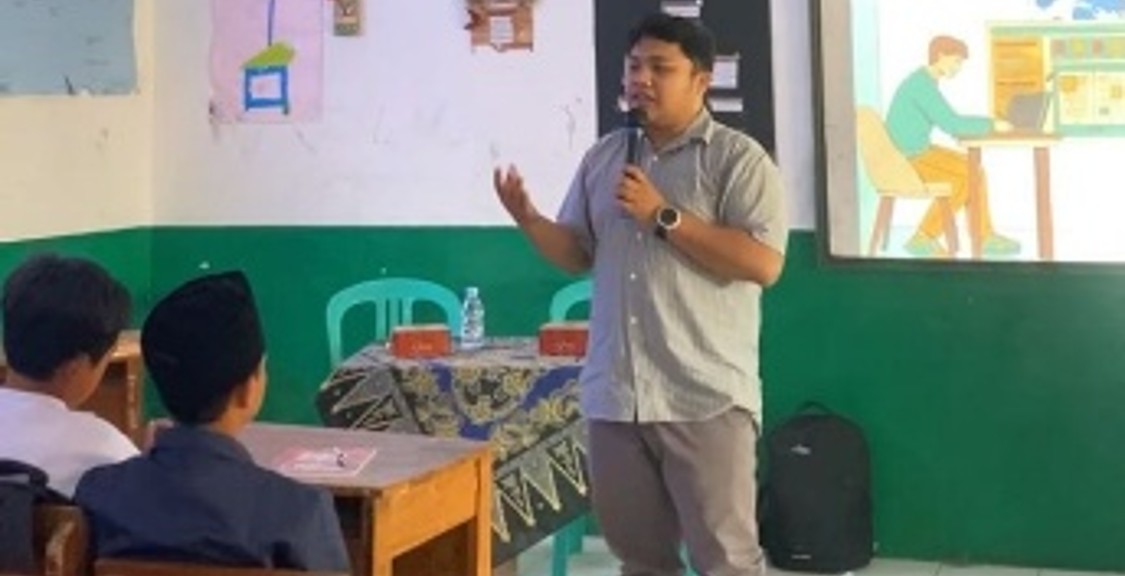
Digital ethics education is increasingly needed as adolescents use social media for communication, entertainment, and learning while also facing risks related to hoaxes, cyberbullying, privacy leakage, and impolite online interaction. This article reports a participatory community service program at MTs Al Furqan aimed at strengthening students’ knowledge and awareness of responsible social media use. The program involved 87 seventh- and eighth-grade students in 2025. The activities consisted of partner needs identification, an interactive seminar, guided discussion, roleplay simulation, and pretest–posttest evaluation. The pretest showed an average score of 42.3%, indicating limited initial understanding, especially in preventive actions against social media risks (13.7%). After the program, the average posttest score increased to 83.7%, with the highest achievements in hoax response (100%), recognizing shareable information (90.8%), and understanding social media risks (89.6%). These findings indicate that participatory digital ethics education can strengthen students’ digital literacy, online safety awareness, and practical readiness to respond to hoaxes, cyberbullying, and privacy risks.
References
Asosiasi Penyelenggara Jasa Internet Indonesia [APJII]. (2024). APJII jumlah pengguna internet Indonesia tembus 221 juta orang. APJII. https://apjii.or.id/berita/d/apjii-jumlah-pengguna-internet-indonesia-tembus-221-juta-orang
Choi, M. (2016). A concept analysis of digital citizenship for democratic citizenship education in the internet age. Theory & Research in Social Education, 44(4), 565-607. https://doi.org/10.1080/00933104.2016.1210549
Choi, M., Glassman, M., & Cristol, D. (2017). What it means to be a citizen in the internet age: Development of a reliable and valid digital citizenship scale. Computers & Education, 107, 100-112. https://doi.org/10.1016/j.compedu.2017.01.002
DataReportal. (2025). Digital 2025: Indonesia. DataReportal. https://datareportal.com/reports/digital-2025-indonesia
Guess, A. M., Lerner, M., Lyons, B., Montgomery, J. M., Nyhan, B., Reifler, J., & Sircar, N. (2020). A digital media literacy intervention increases discernment between mainstream and false news in the United States and India. Proceedings of the National Academy of Sciences, 117(27), 15536-15545. https://doi.org/10.1073/pnas.1920498117
Hobbs, R. (2010). Digital and media literacy: A plan of action. The Aspen Institute.
Jones, L. M., & Mitchell, K. J. (2016). Defining and measuring youth digital citizenship. New Media & Society, 18(9), 2063-2079. https://doi.org/10.1177/1461444815577797
Kahne, J., & Bowyer, B. (2017). Educating for democracy in a partisan age: Confronting the challenges of motivated reasoning and misinformation. American Educational Research Journal, 54(1), 3-34. https://doi.org/10.3102/0002831216679817
Kim, M., & Choi, D. (2018). Development of youth digital citizenship scale and implication for educational setting. Educational Technology & Society, 21(1), 155-171. https://www.jstor.org/stable/26273877
Kolb, D. A. (1984). Experiential learning: Experience as the source of learning and development. Prentice Hall.
Law, N., Woo, D., de la Torre, J., & Wong, G. (2018). A global framework of reference on digital literacy skills for indicator 4.4.2. UNESCO Institute for Statistics.
Livingstone, S., & Helsper, E. J. (2010). Balancing opportunities and risks in teenagers’ use of the internet: The role of online skills and internet self-efficacy. New Media & Society, 12(2), 309-329. https://doi.org/10.1177/1461444809342697
Livingstone, S., Mascheroni, G., & Staksrud, E. (2018). European research on children’s internet use: Assessing the past and anticipating the future. New Media & Society, 20(3), 1103-1122. https://doi.org/10.1177/1461444816685930
Livingstone, S., & Third, A. (2017). Children and young people’s rights in the digital age: An emerging agenda. New Media & Society, 19(5), 657-670. https://doi.org/10.1177/1461444816686318
Luthfia, A., Triputra, P., & Hendriyani. (2019). Indonesian adolescents’ online opportunities and risks. Jurnal ASPIKOM, 4(1), 1-13. https://doi.org/10.24329/aspikom.v4i1.445
Malihah, Z., & Alfiasari. (2018). Perilaku cyberbullying pada remaja dan kaitannya dengan kontrol diri dan komunikasi orang tua. Jurnal Ilmu Keluarga dan Konsumen, 11(2), 145-156. https://doi.org/10.24156/jikk.2018.11.2.145
Maulani, G. A. F., Nugraha, M. H., & Putri, M. A. (2022). Introducing digital marketing to expand marketing for MSME players in Hamlet 3 Mekkaraya, Kersamanah District, Garut Regency. Indonesian Journal of Community Empowerment (IJCE), 3(02), 40-48. https://doi.org/10.35899/ijce.v3i02.459
Maulani, G. A. F., Fauziah, N., & Mubarok, T. M. S. (2023). The effect of digital literacy and e-commerce toward digital entrepreneurial intention. Business Innovation and Entrepreneurship Journal, 5(3), 184-191. https://doi.org/10.35899/biej.v5i3.691
Nygren, T., & Guath, M. (2022). Students evaluating and corroborating digital news. Scandinavian Journal of Educational Research, 66(4), 549-565. https://doi.org/10.1080/00313831.2021.1897876
Park, S., Na, E.-Y., & Kim, E.-M. (2014). The relationship between online activities, netiquette and cyberbullying. Children and Youth Services Review, 42, 74-81. https://doi.org/10.1016/j.childyouth.2014.04.002
Pennycook, G., & Rand, D. G. (2019). Lazy, not biased: Susceptibility to partisan fake news is better explained by lack of reasoning than by motivated reasoning. Cognition, 188, 39-50. https://doi.org/10.1016/j.cognition.2018.06.011
Pennycook, G., Epstein, Z., Mosleh, M., Arechar, A. A., Eckles, D., & Rand, D. G. (2021). Shifting attention to accuracy can reduce misinformation online. Nature, 592(7855), 590-595. https://doi.org/10.1038/s41586-021-03344-2
Santer, N. D., Manago, A. M., Starks, A., & Reich, S. M. (2023). Early adolescents’ perspectives on digital privacy. In The MIT Press eBooks (pp. 123-160). The MIT Press. https://doi.org/10.7551/mitpress/13654.003.0012
Soni, M., Solihat, A., Adiansyah, A., Dahlena, A., Maulani, G. A. F., & Hamdani, N. A. (2024). The role of digitalization in developing entrepreneurial spirit in Generation Z. Business Innovation and Entrepreneurship Journal, 6(2), 89-94. https://doi.org/10.35899/biej.v6i2.957
Staksrud, E., & Livingstone, S. (2009). Children and online risk: Powerless victims or resourceful participants? Information, Communication & Society, 12(3), 364-387. https://doi.org/10.1080/13691180802635455
Yuniawati, E. I., Tiatri, S., & Beng, J. T. (2024). Strengthening digital citizenship behavior to reduce cyberbullying through learning outcome mediation. ENLIGHTEN: Jurnal Bimbingan Konseling Islam, 7(2), 82-108. https://doi.org/10.32505/enlighten.v7i2.9530
Downloads
Published
How to Cite
Issue
Section
License
Copyright (c) 2026 Galih Abdul Fatah Maulani, Muhamad Fathur Fawwaz, Sopa Siti Marwah, Azriel Aldika, Ali Ahmad Hanafiah, Restu Ardiansyah

This work is licensed under a Creative Commons Attribution-ShareAlike 4.0 International License.
Authors who publish with this journal agree to the following terms:
The author(s) retain copyright and grant the journal the right of first publication with the work simultaneously licensed under a CC BY-SA 4.0 license that allows others to remix, adapt, and build upon the work even for commercial purposes, as long as they credit the author(s) and license their new creations under the identical terms.
License details: https://creativecommons.org/licenses/by-sa/4.0/


