Optimalisasi pengelolaan limbah minyak jelantah melalui pelatihan pembuatan lilin aromaterapi untuk mendukung ekonomi kreatif
DOI:
https://doi.org/10.53088/penamas.v6i2.3160Keywords:
Aromatherapy, Candles, Processed Used CookingAbstract
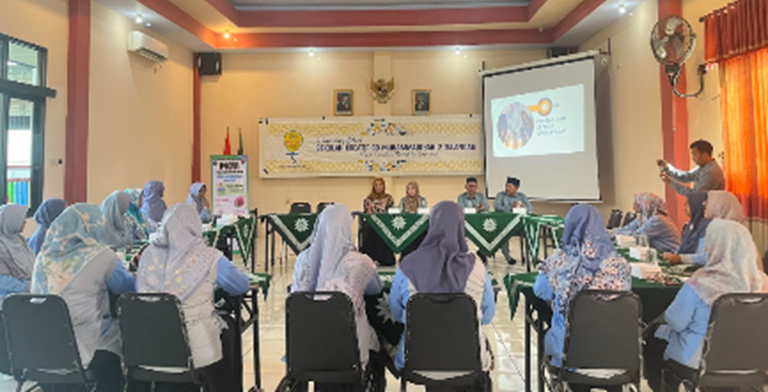
Household used cooking oil waste represents one of the most abundant waste sources generated at the household level. Despite its economic potential when properly utilized, the management of this waste remains suboptimal. This community service activity aims to enhance the literacy, skills, and capacity of the Ikwam Group at SD Kreatif Muhammadiyah 2 Tulangan in processing used cooking oil waste into valuable products. The implementation methods include socialization on the impacts and utilization potential of used cooking oil, as well as training on simple purification processes and product creation, such as aromatherapy candles made from used cooking oil. Activity evaluation was conducted using participant response questionnaires based on the Likert scale. The results indicate that the program positively impacted participants' knowledge, motivation, skills, and awareness in household waste management. Based on the evaluation, the program achieved an 88.5% success rate, with an overall average score of 4.43, categorized as excellent. This initiative not only boosts partners' capacity for sustainable waste management but also opens opportunities for household-based creative economic development through the utilization of used cooking oil.
References
Adelia, M., Ardi, H., Wulandari, T. C., & Hayati, A. (2026). Peningkatan Keterampilan dan Inovasi Produk Lokal melalui KKN: Pelatihan Pembuatan Lilin Aromaterapi Berbasis Minyak Jelantah di Desa Balai Kasih. Jurnal Pengabdian kepada Masyarakat Nusantara, 7(1), 971-976. http://doi.org/10.55338/jpkmn.v7i1.7116
Agustine, D., Nurlatifah, I., & Sujana, D. (2022). Pelatihan Pembuatan Sabun Dari Minyak Jelantah Sebagai Upaya Pemanfaatan Limbah Rumah Tangga. Dinamisia: Jurnal Pengabdian Kepada Masyarakat, 6(2), 452-459. https://doi.org/10.31849/dinamisia.v6i2.9220
Aisyah, L. S., Yun, Y. F., Yuliana, T., & Widianingsih, S. (2020). Pelatihan Pembuatan Lilin Aromaterapi Dalam Pemanfaatan Limbah Minyak Jelantah. Jurnal Abdimas Kartika Wijayakusuma, 1(2), 98–103.
Ariyani, S. B., & Hidayati, H. (2018). Penambahan Gel Lidah Buaya Sebagai Antibakteri Pada Sabun Mandi Cair Berbahan Dasar Minyak Kelapa. Indonesian Journal of Industrial Research, 13(1), 11-18. https://doi.org/10.33104/jihp.v13i1.3675
Azimah, A., Sarah, M., Fadhlina, D., Thoyyibah, W., Novianti, I., Barokah, L., & Maulana, I. (2025). Inovasi Peduli Lingkungan Dengan Mengolah Minyak Jelantah Menjadi Lilin Aromaterapi Yang Bernilai Ekonomi. DISEMINASI Jurnal Pengabdian kepada Masyarakat, 7(2), 268-276. https://doi.org/10.33830/diseminasiabdimas.v7i2.10545
Bintang, P. N., Sholihat, N., Kurniawan, M. I., Marlinda, M., Anisa, P., Isparizal, R., Alyah, N., Manik, F. N., Bagio, Z. J., Azizi, R. P., Rahman, M., Ridha, M. R., & Rafiza, R. (2025). Inovasi Ekonomi Kreatif: Lilin Aromaterapi dari Minyak Jelantah sebagai Solusi Lingkungan Kampung Buantan Lestari Kecamatan Bunga Raya. Jurnal Pengabdian UntukMu NegeRI, 9(3), 521-525. https://doi.org/10.37859/jpumri.v9i3.10167
Ilyas, N. I., Dewi, R., Nurhidayanti, N., Riandani, A. P., & Suri, A. (2023). Edukasi Pengolahan Limbah Minyak Jelantah menjadi Lilin Aromaterapi di Rt 04 Rw 14 Griya Jatinangor 2 Kecamatan Tanjungsari Sumedang. Lentera Pengabdian, 1(04), 414-424. https://doi.org/10.59422/lp.v1i04.157
Inayati, N. I., & Dhanti, K. R. (2021). Pemanfaatan minyak jelantah sebagai bahan dasar pembuatan lilin aromaterapi sebagai alternatif tambahan penghasilan pada anggota Aisyiyah Desa Kebanggan Kec Sumbang. Budimas: Jurnal Pengabdian Masyarakat, 3(1), 160-166.
Hartanto, L. C., Swastika, G. L. D., Soelistyowati, S., Tanzil, M. Y., & Tahalele, Y. K. S. (2024). Pengembangan Produk Sajadah Untuk Si Kecil: Pemberdayaan Ibu-Ibu PKK di Desa Bungurasih, Sidoarjo. Community Development Journal : Jurnal Pengabdian Masyarakat, 5(3), 4549–4557. https://doi.org/10.31004/cdj.v5i3.27957
Nuryanti, R., Anggraini, I. F., Sari, D. K., & Sonya. (2023). Uji Kualitas Bahan Bakar Biodiesel Dari Minyak Jelantah ( Penggorengan Pecel Lele) Dengan Parameter Uji Spesific Gravity 60/60 ˚F Astm D-1298, Distilasi Astm D-86, Viskositas Kinematik Astm D-445, Flash Point Pm Astm D-93, Pour Point Astm D-97 dan Cetane. Jurnal Cakrawala Ilmiah, 3(1), 229-236. https://doi.org/10.53625/jcijurnalcakrawalailmiah.v3i1.6538
Pancane, I. W., Putri, N. L., Suryadinatha, A. O., Adrama, N. G., & Suriana, I. W. (2025). Pemberdayaan Masyarakat Melalui Konversi Minyak Jelantah Menjadi Energi Terbarukan Berbasis Teknologi Ucollect Di Desa Tonja. Jurnal Pengabdian Masyarakat: Pemberdayaan, Inovasi Dan Perubahan, 5(2), 121-126. https://doi.org/10.59818/jpm.v5i2.1484
Prabasari, I., & Rineksane, I. A. (2023). Pengolahan limbah rumah tangga minyak jelantah menjadi sabun cair. Berdikari: Jurnal Inovasi Dan Penerapan Ipteks, 11(2), 195-204. https://doi.org/10.18196/berdikari.v11i2.17320
Sari; B. B. P., & Kusumastuti, D. A. (2025). Pemanfaatan Minyak Jelantah Sebagai Bahan Utama Dalam Pembuatan Lilin Aromaterapi: Inovasi Kreatif Dalam Mendukung Prinsip Ekonomi Sirkular Dan Berkelanjutan. Jurnal Inovasi Sosial Dan Pengabdian, 2(3), 136–141. https://doi.org/10.62383/transformasi.v2i3.1752
Yoshio, A. (2020). Minyak Jelantah Rumah Tangga Masih Banyak Terbuang. Katadata. https://katadata.co.id/infografik/5fa1323b451a1/minyak-jelantah-rumah-tangga-masih-banyak-terbuang
Yunita, I., Siregar, E., Holidah, M., & Simanjuntak, G. J. G. (2024). Pemberdayaan Masyarakat Melalui Pemanfaatan Limbah Minyak Jelantah Menjadi Sabun Pembersih Lantai Di Desa Karya Indah Kecamatan Tapung Kampar. Jurnal Pengabdian Masyarakat Multidisiplin, 8(1), 25-31. https://doi.org/10.36341/jpm.v8i1.5275
Downloads
Published
How to Cite
Issue
Section
License
Copyright (c) 2026 Metatia Intan Mauliana, Nuril Lutvi Azizah

This work is licensed under a Creative Commons Attribution-ShareAlike 4.0 International License.
Authors who publish with this journal agree to the following terms:
The author(s) retain copyright and grant the journal the right of first publication with the work simultaneously licensed under a CC BY-SA 4.0 license that allows others to remix, adapt, and build upon the work even for commercial purposes, as long as they credit the author(s) and license their new creations under the identical terms.
License details: https://creativecommons.org/licenses/by-sa/4.0/


