Implementasi game edukasi ZYLAND berbasis computational thinking untuk meningkatkan literasi numerasi siswa slow learner
DOI:
https://doi.org/10.53088/penamas.v6i1.2824Keywords:
Education, Joyful Learning, Slow Learners, ZYLAND, ZYMATH ARAbstract
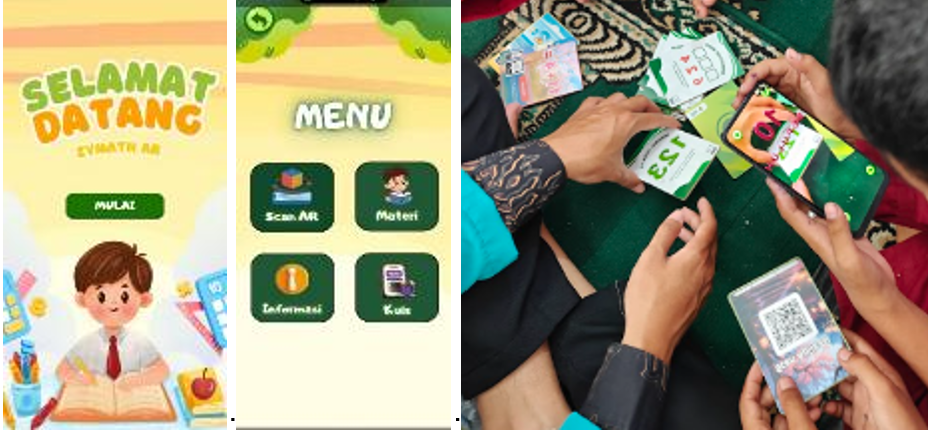
The objective of this community service project is to implement joyful learning through the ZYLAND educational game. This computational thinking-based tool is designed to enhance the literacy, numeracy, and concentration of 29 slow learner students at SD Negeri Wiropaten through digital educational games and Augmented Reality (AR) technology. The methods employed include empowerment, training, and technical assistance for the partners. The results indicate that ZYLAND had a positive impact, improving students' abilities in number recognition, simple addition, pattern comprehension, and logical decision making, accompanied by active participation, enthusiasm, and increased self-confidence among the slow learners. In terms of literacy and numeracy, letter and number recognition improved significantly from 40% to 75%, while proficiency in basic arithmetic and problem solving rose from 42% to 78%. Furthermore, students’ reading skills and comprehension improved, increasing from 38% to 73% following the program. Beyond academic aspects, this joyful learning medium also increased student concentration levels from 45% to 68% and strengthened their collaborative skills from 65% to 80%.
References
Adawiyah, R., & Prihandini, R. M. (2023). Pendampingan Pendidik dalam Pengembangan Meaningfull dan Joyfull Learning Berbasis Mathtrail untuk Meningkatkan Literasi Numerasi Siswa Menggunakan Model ADDIE. JPKMI (Jurnal Pengabdian Kepada Masyarakat Indonesia), 4(1), 13–24. https://doi.org/10.36596/jpkmi.v3i4.609
Andrianu, A., Mansur, H., & Rini, S. (2025). Systematic Literature Review: Pemanfaatan Augmented Reality Sebagai Media Pembelajaran Terhadap Literasi Siswa di Sekolah Dasar. Al-Madrasah: Jurnal Ilmiah Pendidikan Madrasah Ibtidaiyah, 9(3), 1127–1140. https://doi.org/10.35931/am.v9i3.5064
Carolina, Y. D. (2023). Augmented Reality sebagai Media Pembelajaran Interaktif 3D untuk Meningkatkan Motivasi Belajar Siswa Digital Native. Ideguru: Jurnal Karya Ilmiah Guru, 8(1), 10–16. https://doi.org/10.51169/IDEGURU.V8I1.448
Ginting, R. L., Sipayung, K. N. A. S. B., Ramahdani, D., zhafirah, M., Hutasoit, G., Ramadana, D., Caroline, I., & Zafirah, A. J. (2023). Implementasi Model Pembelajaran Inklusif Untuk Anak Slow Learner. Pendekar : Jurnal Pendidikan Berkarakter, 1(6), 242–257. https://doi.org/10.51903/pendekar.v1i6.510
Irawati, L., & Hadi, M. S (2025). Computataional Thinking dalam Pengembangan Berpikir Matematis di Sekolah Dasar. JIIP - Jurnal Ilmiah Ilmu Pendidikan, 8(2), 2358–2364. https://doi.org/10.54371/JIIP.V8I2.7106
Izzah, N., Setianti, Y., & Tiara, O. (2023). Peran Kepemimpinan Kepala Sekolah dalam Mewujudkan Sekolah Ramah Anak di Sekolah Inklusi. Murhum : Jurnal Pendidikan Anak Usia Dini, 4(2), 272–284. https://doi.org/10.37985/murhum.v4i2.236
Marbun, E. M., Silaban, L. N. I. P., Hasugian, E. L., & Turnip, H. (2023). Media Pembelajaran Adaptif Bagi Anak Berkebutuhan Khusus Dalam Administrasi Pendidikan. Jurnal Pendidikan Sosial Dan Humaniora, 2(1), 47–63.
Mauzifa, Jamiilah, L. N. L., Amali, S., Shabri, A., & Ruswandi, U. (2025). Understanding Slow Learner Student Development: Strategy Implications and Learning Effectiveness. Al-Afkar, Journal For Islamic Studies, 8(1), 790–809. https://doi.org/10.31943/afkarjournal.v8i1.1862
Deda, Y. N., Disnawati, H., Kasa, A. R., Owa, F., & Kusi, E (2023). Efektivitas “Puzzle Rumah Perkalian” dalam Menunjang Konsep Matematika Dasar Murid Slow Learner di Kawasan Perbatasan. Parta: Jurnal Pengabdian Kepada Masyarakat, 4(2), 134–141. https://doi.org/10.38043/PARTA.V4I2.4592
Soraya, N., Mendrofa, N. E., Shalihah, N., Nainggolan, Y. R., & Nasution, A. A. B. (2024). Peran Hubungan Orang Tua dan Anak Slow Learner dalam Mendukung Proses Pendidikan. Jurnal Humaniora dan Sosial Sains, 1(3), 355-360.
Downloads
Published
How to Cite
Issue
Section
License
Copyright (c) 2026 Vio Arvendha, Rahadatul Aisy Tsamarah Ilyas, Suryani Elmaghfiroh, Ryani Dewi Nuraini, Dhandy Hananthiyo Ardhy Putra, Siti Azizah Susilawati

This work is licensed under a Creative Commons Attribution-ShareAlike 4.0 International License.
Authors who publish with this journal agree to the following terms:
The author(s) retain copyright and grant the journal the right of first publication with the work simultaneously licensed under a CC BY-SA 4.0 license that allows others to remix, adapt, and build upon the work even for commercial purposes, as long as they credit the author(s) and license their new creations under the identical terms.
License details: https://creativecommons.org/licenses/by-sa/4.0/


