Edukasi etika dan pemanfaatan artificial intelligence secara bijak bagi peserta didik sekolah dasar
DOI:
https://doi.org/10.53088/penamas.v6i1.2769Keywords:
Ethics Education, Artificial Intelligence, Students Elementary, School, Community ServiceAbstract
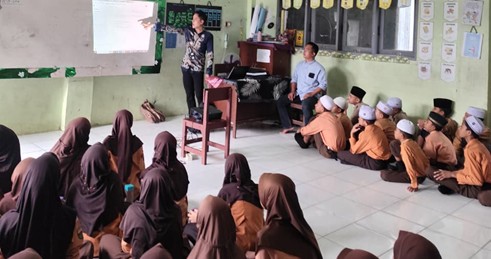
The use of digital devices supported by artificial intelligence has become increasingly common in elementary school learning activities; however, it is not always accompanied by adequate ethical understanding. This condition may lead to issues with academic honesty, critical thinking, and responsible use of technology. This community service activity aimed to provide elementary school students at Yayasan Pendidikan Islam Al-Fakhri with education on the ethical and responsible use of artificial intelligence. A participatory approach was employed, involving students and teachers at the stages of needs identification, program planning, educational implementation, simulations, mentoring, and evaluation. The activities focused on introducing basic artificial intelligence concepts, ethical principles in technology use, and responsible learning practices. Data were collected through direct observation, reflective discussions, and students’ responses during the activities. The results indicate increased awareness of ethical use of technology, improved understanding of academic honesty, and enhanced ability to evaluate digital information critically. Students began to perceive artificial intelligence as a learning support tool rather than a substitute for independent thinking.
References
Amalia, S. N., Fatmawati, M., & Nuriana, E. (2025). Menumbuhkan Literasi Artificial Intelligence (AI) untuk Siswa Sekolah Dasar melaluiPendidikan Science, Technology, Engineering, Art, and Mathematics (STEAM). Briliant: Jurnal Riset Dan Konseptual, 10(2), 382–387. https://doi.org/10.28926/briliant.v10i2.2077
Amelia, N., Khasanah, M. N., Hidayah, N., & Nizzah, H. (2024). Pemanfaatan Teknologi Artificial Intelligence ( AI ) dalam Media Pembelajaran IPA untuk Meningkatkan Keterampilan Berpikir Kritis Siswa SD. J-CEKI: Jurnal Cendekia Ilmiah, 4(1), 303–312. https://doi.org/10.56799/jceki.v4i1.6166
Astuti, A., Thoha, M., Dahliah, J., Maryanti, A., Ambarita, D., & Hidayat, T. (2025). Etika Penggunaan AI di Sekolah : Menyeimbangkan Inovasi Dengan Integritas Akademik. Journal of Artificial Intelligence and Digital Business (RIGGS), 4(2), 5893–5900. https://doi.org/10.31004/riggs.v4i2.1639
Citrawati, T., Supriyanto, T., Suminar, T., & Haryadi. (2025). Futurologi Pendidikan Bahasa di Era Digital : Eksplorasi AI untuk Literasi Anak Usia SD. GHANCARAN: Jurnal Pendidikan Bahasa Dan Sastra Indonesia, Special Ed, 463–474. https://doi.org/10.19105/ghancaran.vi.21690
Doni, A. P., & Rahman, T. (2025). Mengenal Pentingnya Sentuhan yang Pantas dan Tidak Pantas melalui Sosialisasi Edukatif Interaktif kepada Siswa/i SD N 01 Campago Malalak Utara. AhkamServe: Journal of Sharia Community Service, 1(4), 197–207.
Hermawan, S., & Ningsih, T. (2025). Masa depan pendidikan: Membangun literasi AI dan keterampilan sosial dalam kurikulum. Pendas: Jurnal Ilmiah Pendidikan Dasar, 10(04), 234–247. https://doi.org/10.23969/jp.v10i04.36480
Hidayatullah, M., Suriansyah, A., & Harsono, A. M. B. (2025). Analisis Pemanfaatan AI Untuk Mengerjakan Tugas Rumah Pada Siswa Sekolah Dasar. JPIM: Jurnal Penelitian Ilmiah Multidisipliner, 2(4), 2763–2772.
Ilmi, M., Syofiawan, D., & Situmorang, R. (2025). Edukasi Penggunaan Ai Dan Media Sosial Yang Bijak Untuk Mencegah Perilaku Menyimpang. Jurnal Pengabdian Masyarakat: Pemberdayaan, Inovasi Dan Perubahan, 5(6). https://doi.org/10.59818/jpm.v5i6.2207
Jihadillah, M. (2025). Mengembangkan Kerangka Kerja Literasi Kecerdasan Artifisial (AI) untuk Masyarakat Umum: Sebuah Model Pengabdian Edukatif di Era Disrupsi Digital. SWARNA: Jurnal Pengabdian Kepada Masyarakat, 4(5), 858–869. https://doi.org/10.55681/swarna.v4i5.1757
Mulyani, S., Suriansyah, A., Mulya, A., & Harsono, B. (2025). Dampak dan Tantang Implementasi AI Dalam Pembelajaran di Sekolah Dasar. Jurnal Penelitian Ilmiah Multidisipliner, 02(04), 2376–2385.
Nasrul, P. T., Alfadila, N., Maharani, N., & others. (2025). Peran dan dampak artificial intelligence dalam pendidikan: Kajian dari calon guru pendidikan dasar. Jurnal Media Akademik (JMA), 3(8), 1–15.
Putri, A., & Ikhsan, J. (2025). Pemanfaatan Artificial Intelligence dalam Pengembangan Media Pembelajaran untuk Meningkatkan Minat Belajar Peserta Didik. Journal of Learning Technology and Innovation, 1(1), 16–29.
Putri, N., Perdani, A. P. E., Maymoenah, N., Hidayah, M. F., Ardan, M., & Nasution, D. (2025). Peningkatan kesadaran etika dan berpikir kritis melalui edukasi penggunaan generative AI. Jurnal Masyarakat Indonesia (Jumas), 4(03), 454–464. https://doi.org/10.54209/jumas.v4i03.335
Rahmawati, F., Setiani, A. W., Utari, M. P., Safinatunnajah, S., Ain, T. N., & Atmoko, S. (2025). Pengenalan Artificial Intelligence bagi Siswa Sekolah Dasar Melalui Literasi Digital. Dedikasi: Journal of Community Engagement and Empowerment, 3(1), 35–41.
Skiara, M. Z., Markarma, A., & Nur, M. D. M. (2025). Inovasi Pembelajaran Pendidikan Agama Islam Berbasis AI: Manfaat, Aplikasi, dan Tantangan Etis-Teologis. Prosiding Kajian Islam Dan Integrasi Ilmu Di Era Society (KIIIES) 5.0, 4(1), 377–382.
Triyono, T., Kasih, F., Putri, B. N. D., & Febriani, R. D. (2025). Edukasi Pemanfaatan Artificial Intelligence untuk Meningkatkan Literasi Digital Siswa SMA. Wahana Dedikasi: Jurnal PkM Ilmu Kependidikan, 8(2). https://doi.org/10.31851/sz70ac42
Tuningsih, S., & Wahyuningsih, P. I. (2025). Pengalaman Guru Sekolah Dasar Menggunakan Artificial Intelligence dalam Pembelajaran. J-INSTECH: Journal of Instructional Technology, 6(1), 150–155. https://doi.org/10.20527/j-instech.v6i1.15302
Whinandra, M. P., Hindarso, C. R., Wiratama, P. W., Solinur, H. P., Santoso, I., Wijaya, L. N., Putro, G. S. W., Sakailoat, A. R. L., Agustin, F. S., Pae, K., & others. (2025). Dampak Artificial Intelligence Dalam Pendidikan Kesehatan: Tinjauan Etis dan Implikasinya. Jurnal Ners LENTERA, 13(2), 170–185. https://doi.org/10.33508/ners.v13i2.7684
Downloads
Published
How to Cite
Issue
Section
License
Copyright (c) 2026 Niko Surya Atmaja, Sahyunan Harahap

This work is licensed under a Creative Commons Attribution-ShareAlike 4.0 International License.
Authors who publish with this journal agree to the following terms:
The author(s) retain copyright and grant the journal the right of first publication with the work simultaneously licensed under a CC BY-SA 4.0 license that allows others to remix, adapt, and build upon the work even for commercial purposes, as long as they credit the author(s) and license their new creations under the identical terms.
License details: https://creativecommons.org/licenses/by-sa/4.0/


