Sinergi bio-surya: Model kemitraan pengabdian masyarakat untuk transformasi limbah dapur menuju kemandirian energi
DOI:
https://doi.org/10.53088/penamas.v6i1.2543Keywords:
Sinergi Bio-Surya, Waste to Product, Participatory Action Research, BiodigesterAbstract
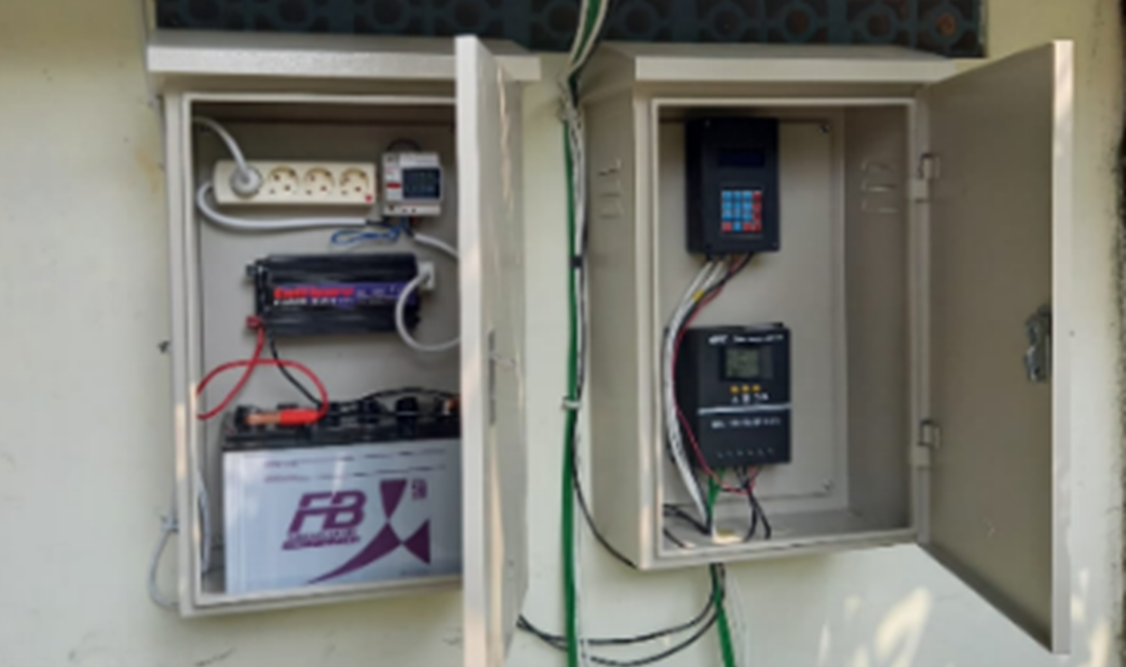
RW 06 in Purwosari Village, Baturraden Subdistrict, faces two major challenges: unmanaged daily kitchen waste that contributes to sanitation and environmental problems, and reliance on PLN electricity, which is unreliable and costly for communal needs. This article presents the design, implementation, and effectiveness of the "Bio-Solar Synergy Partnership Model," a community-based Waste-to-Product (WTP) approach that integrates an anaerobic biodigester with a solar photovoltaic (PV) system. The program employed a Participatory Action Research (PAR) method, built on active collaboration among the service team, village administrators, and local community groups. The model successfully converted an average of 50 kg/day of organic kitchen waste and generated 1 kWh of electricity per day from the PV system. Importantly, the partnership model also established a local institution, the "Independent Energy Working Group (Pokja Energi Mandiri)," which independently manages operations and maintenance. The PV system plays a critical role in ensuring the continuous operation of the blender and the biodigester control system. Overall, the Bio-Solar Synergy model proved socio-technically effective: it reduced waste, produced clean energy, and strengthened community capacity and social ownership.
References
Afif, F., & Martin, A. (2022). Tinjauan potensi Dan Kebijakan energi surya di Indonesia. Jurnal Engine: Energi, Manufaktur, dan Material, 6(1), 43-52. https://doi.org/10.30588/jeemm.v6i1.997
Amin, M. S., Susanti, A., & Airlangga, P. (2021). Sistem Monitoring Suhu Dan Kelembaban Berbasis IoT Pada Proses Pembuatan Pupuk Organik Padat. SAINTEKBU, 13(02), 1-12. https://doi.org/10.32764/saintekbu.v13i02.1559
Amyati, A., Warniningsih., Endartiwi, S. S., & Kyswantoro, Y. F. (2023). Pengelolaan Sampah Berbasis Masyarakat Untuk Mendudkung Pariwisata Sehat di Kota Yogyakarta. Jurnal Jarlit, 19(1). https://doi.org/10.70154/jid.v19i1.61
Andriani, A. E., Shobrina, A. S., Nurrohmah, I. P., & Irbah, K. (2022). Pemanfaatan limbah rumah tangga menjadi pupuk cair dan pupuk padat. Jurnal Bina Desa, 4(2), 241-244. https://doi.org/10.15294/jbd.v4i2.32473
Febrianti, N., Prambudi, D. A., & Anggraeny, R. D. (2023). Analisis Emisi Gas Rumah Kaca (GRK) pada Pengelolaan Sampah Organik (Studi Kasus: ITF Kota Hijau Balikpapan). Jurnal Sains & Teknologi Lingkungan, 15(2), 106-120. https://doi.org/10.20885/jstl.vol15.iss2.art1
Firmansyah, I., Syakir, M., & Lukman, L. (2017). Pengaruh kombinasi dosis pupuk N, P, dan K terhadap pertumbuhan dan hasil tanaman terung (Solanum melongena L.) [The influence of dose combination fertilizer N, P, and K on growth and yield of eggplant crops (Solanum melongena L.)]. Indonesian Agency for Agricultural Research and Development. http://dx.doi.org/10.21082/jhort.v27n1.2017.p69-78
Haryanto, L. I., Tanjung, D. D., Putri, D. I., & Adana, A. H. (2023). Pengelolaan Limbah Organik: Potensi Ekonomi Agen Biodegradasi Limbah Organik. CV. Bintang Semesta Media.
Hastuti, S., Martini, T., Purnawan, C., Masykur, A., & Wibowo, A. H. (2021). Pembuatan Kompos Sampah Dapur dan Taman dengan Bantuan Aktivator EM4. Proceeding of Chemistry Conferences, 6, 18. https://doi.org/10.20961/pcc.6.0.55084.18-21
Kharisma, A., Pinandita, S., & Jayanti, A. E. (2024). Literature Review: Kajian Potensi Energi Surya Alternatif Energi Listrik. Jurnal Energi Baru Dan Terbarukan, 5(2), 145–154. https://doi.org/10.14710/jebt.2024.23956
Rohmadi, M., Septiana, N., & Astuti, P. A. P. (2022). Pembuatan Pupuk Organik Cair dan Kompos dari Limbah Organik Rumah Tangga. Jurnal Ilmu Lingkungan, 20(4), 880–886. https://doi.org/10.14710/jil.20.4.880-886
Rohmatusfaida, W. (2025). Design of Liquid Organic Fertilizer Composting Automation System with Internet of Things – Based Temperature Sensor. Jurnal Otomasi Kontrol Dan Instrumentasi, 17(2), 122-133. https://doi.org/10.5614/joki.2025.17.2.7
Rusli, T. S., Boari, Y., Amelia, D. A., Rahayu, D., Setiaji, B., & Yuniwati, I. (2024). Pengantar metodologi pengabdian masyarakat. Pidie: Yayasan Penerbit Muhammad Zaini.
Sulistiawan, E. (2021). Pengaruh Pupuk Npk Organik Dan Pupuk Organik Cair Top G2 Terhadap Pertumbuhan Serta Produksi Tanaman Terung Gelatik (Solanum melongena L.) (Doctoral dissertation, Universitas Islam Riau).
Trisakti, B., & Azka, N. (2020). Pengaruh Laju Pengadukan Terhadap Stabilitas Digester Anaerobik Satu Tahap pada Pembentukan Biogas dari Limbah Cair Pabrik Kelapa Sawit Menggunakan Lab Scale Reaktor Batch. Jurnal Teknik Kimia USU, 9(1), 16-20. https://doi.org/10.32734/jtk.v9i1.3294
Yuliani, F., Kristiowati, D., & Hermyantono, C. (2022). Pelatihan Pembuatan Cairan Serbaguna Eco-Enzyme dari Sampah Organik dan Cara Pemanfaatannya di Desa Gondangmanis, Bae, Kudus. PRIMA: Journal of Community Empowering and Services, 6(1), 37-45. https://doi.org/10.20961/prima.v6i1.60122
Yusnazri, Y., Pribadyo, P., & Masykur, M. (2025). Analisa Kerusakan Mesin Digester Menggunakan Metode Failure Mode Dan Effect Analysis (FMEA) Di PT. Beurata Subur Persada. Jurnal Mekanova: Mekanikal, Inovasi dan Teknologi, 11(1), 190-197. https://doi.org/10.35308/jmkn.v11i1.12351
Downloads
Published
How to Cite
Issue
Section
License
Copyright (c) 2026 Gema Romadhona, Rum Sapundani, Itmi Hidayat Kurniawan, Tanziila Faidza Arfa, Anggito Imam Raharjo

This work is licensed under a Creative Commons Attribution-ShareAlike 4.0 International License.
Authors who publish with this journal agree to the following terms:
The author(s) retain copyright and grant the journal the right of first publication with the work simultaneously licensed under a CC BY-SA 4.0 license that allows others to remix, adapt, and build upon the work even for commercial purposes, as long as they credit the author(s) and license their new creations under the identical terms.
License details: https://creativecommons.org/licenses/by-sa/4.0/


