Strengthening Islamic financial literacy through waqf education: A community service initiative at Zammi Yatim and Dhuafa School, Medan
DOI:
https://doi.org/10.53088/penamas.v6i1.2465Keywords:
Waqf Literacy, Islamic Finance, Madrasa Teachers, Digital Training, Islamic EducationAbstract
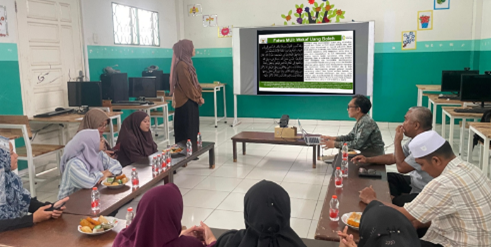
This community service program aimed to strengthen waqf and Islamic financial literacy among teachers at ZAMMI School for Orphans and the Underprivileged in Medan through participatory and technology-based training. The program was implemented through socialization sessions, training on digital teaching media, mentoring, and the provision of basic educational technology tools. Eight teachers participated in the program. The implementation of this community service program (PKM) uses a participatory mixed-method approach, combining both qualitative and quantitative data to gain a comprehensive understanding of the improvement in waqf and Islamic financial literacy among teachers. Evaluation was conducted using observations, interviews, and pre- and post-training questionnaires. The results indicated a substantial improvement in teachers’ understanding of waqf and Islamic finance, as well as increased confidence in utilizing digital media for learning. Quantitatively, the average literacy score increased from 3.34 to 4.45, indicating a significant positive change after the intervention. More importantly, teachers began to integrate waqf values and Islamic financial concepts into learning activities and school-based philanthropic practices.
References
Afandi, S. H. (2024). Peningkatan kualitas pembelajaran melalui kompetensi literasi digital dan continuing professional development (CPD) (Analisis Sequential Explanatory pada Guru MTs. Negeri 5 Tangerang). Institut PTIQ Jakarta.
Aisah, I. (2024). Evaluasi CIPP (Context Input Process Product) program pelatihan peningkatan kompetensi guru PAUD dalam konteks implementasi Merdeka Belajar. IKIP Siliwangi.
Amemasor, S. K., Oppong, S. O., Ghansah, B., Benuwa, B.-B., & Essel, D. D. (2025). A systematic review on the impact of teacher professional development on digital instructional integration and teaching practices. Frontiers in Education, 10, 1541031.
Brugliera, P. (2024). The effectiveness of digital learning platforms in enhancing student engagement and academic performance. Journal of Education, Humanities, and Social Research, 1(1), 26-36. https://doi.org/10.70088/xq3gy756
Capone, R., & Lepore, M. (2022). From distance learning to integrated digital learning: A fuzzy cognitive analysis focused on engagement, motivation, and participation during COVID-19 pandemic. Technology, Knowledge and Learning, 27(4), 1259-1289. https://doi.org/10.1007/s10758-021-09571-w
Fitri, D. A., Sholeh, M., Sari, N. M., Sirait, L. T., Hastuti, N. W., Nurrahmah, S., Lita, L., & Darmawan, H. (2024). Analisis penggunaan media pembelajaran berbasis teknologi dalam pembelajaran IPAS di sekolah dasar. Jurnal Inovasi, Evaluasi Dan Pengembangan Pembelajaran (JIEPP), 4(3), 391–397. https://doi.org/10.54371/jiepp.v4i3.383
Ismail, S., Hassan, M., & Rahmat, S. (2023). Introduction to Islamic social finance. In Islamic Social Finance. Edward Elgar Publishing. https://doi.org/10.4337/9781803929804.00008
Jinan, M. R., Syapiuddin, M., & Nasri, U. (2024). Holistic integration: Syariah finance principles in Islamic education management. Jurnal Ilmiah Profesi Pendidikan, 9(2), 1343–1350. https://doi.org/10.29303/jipp.v9i2.2243
Karina, M., Abdullah, M. R., Ishak, I., & Chen, M. (2025). Ethical Entrepreneurship among Muslim Gen-Z in Indonesia: Islamic Financial Literacy, Self-Efficacy, and Ethical Habitus among Muslim Gen-Z Entrepreneurs in Palopo. Jurnal Indo-Islamika, 15(2), 418-432. https://doi.org/10.15408/jii.v15i2.48717
Kusuma, B. A., Jumadi, S. W., & Rifqi, P. A. (2025). Corporate social responsibility (CSR) as an instrument of economic justice. Nomico, 2(9), 33–43. https://doi.org/10.62872/3znftz38
Kusuma, M. A. (2025). Analisis strategi pengelolaan dan distribusi dana zakat dalam bidang pendidikan dan kewirausahaan: Studi kasus El-Zawa UIN Maulana Malik Ibrahim Malang. Universitas Islam Negeri Maulana Malik Ibrahim.
Lilianti, L., Adam, A., Nurzaima, N., & Mujiati, M. (2024). Pelatihan Pembuatan Media Pembelajaran Digital Berbasis PowerPoint untuk Guru PAUD. Altifani: Jurnal Pengabdian Masyarakat Ushuluddin, Adab, Dan Dakwah, 4(2), 22-30. https://doi.org/10.32939/altifani.v4i2.4676
Mas’ud, A. (2024). Implementasi pendidikan madrasah diniyah yang efektif dan efisien melalui wakaf produktif: Studi kasus di Madrasah Diniyah Wustho Al-Mas’udiyah Sreseh Sampang. Universitas Islam Negeri Maulana Malik Ibrahim.
Masrizal, M., Sukmana, R., & Trianto, B. (2024). The effect of Islamic financial literacy on business performance with emphasis on the role of Islamic financial inclusion: Case study in Indonesia. Journal of Islamic Marketing, 16(1), 166–192. https://doi.org/10.1108/JIMA-07-2022-0197
Miswaty, T. C. (2025). Pelatihan pembuatan media pembelajaran digital bahasa Inggris dengan Canva dan PowerPoint untuk guru SMP. Jurnal Ragam Pengabdian, 2(1), 98–105. https://doi.org/10.62710/s36beg60
Mustofa, U., Melati, I. S., Raihan, A. F., & Bukhori, A. (2022). Increasing sharia financial literacy through sharia financial training and assistance for teachers. Indonesian Journal of Devotion and Empowerment, 4(2), 40–44. https://doi.org/10.15294/ijde.v4i2.66431
Nawawi, Z. M., & Nasution, F. M. (2022). Peran Dompet Dhuafa Wasapada dalam memberikan program pendidikan kepada anak-anak kurang mampu di Kota Medan. El-Mujtama: Jurnal Pengabdian Masyarakat, 2(3), 277–282. https://doi.org/10.47467/elmujtama.v2i3.1312
Novalia, R. J. (2024). Meningkatkan Kualitas Pembelajaran: Peran Strategis Pelatihan Guru. Jurnal Pendidikan Vokasi Dan Seni, 3(1), 13-24. https://doi.org/10.52060/jpvs.v3i1.2768
Nurhabibi, N., Arifannisa, A., Ismail, D., Kuswandi, D., Anggraeni, A. F. D. G., & Aji, Y. A. (2025). Strategi lembaga pendidikan Islam dalam membentuk karakter siswa di era digital. Jurnal Pendidikan Indonesia: Teori, Penelitian, Dan Inovasi, 5(2). https://doi.org/10.59818/jpi.v5i2.1527
Nurhayati, S., Fitri, A., Amir, R., & Zalisman, Z. (2024). Analysis of the implementation of training on digital-based learning media to enhance teachers’ digital literacy. Al-Ishlah: Jurnal Pendidikan, 16(1), 545–557. https://doi.org/10.35445/alishlah.v16i1.4029
Nurhayati, S., Judijanto, L., Wiliyanti, V., Januaripin, M., Winatha, K. R., Payung, Z., & La Abute, E. (2025). Media dan teknologi pembelajaran. PT. Sonpedia Publishing Indonesia.
Pinasti, U. S., & Achiria, S. (2024). The effect of financial literacy and financial capability on the interest in social investment-based cash waqf linked Sukuk investment. Journal of Islamic Economics Lariba, 10(2). https://doi.org/10.20885/jielariba.vol10.iss2.art20
Siregar, K. E. (2024). Optimizing the role of waqf in sustainable development through an Islamic education perspective: A comprehensive literature study. RISALAH IQTISADIYAH: Journal of Sharia Economics, 3(1), 1–9. https://doi.org/10.59107/ri.v3i1.58
Sundana, E. (2025). Manajemen literasi wakaf uang di Yayasan Edukasi Wakaf Indonesia Yogyakarta dalam perspektif Maqasid Wakaf. Universitas Islam Indonesia.
Sweller, J., & Chandler, P. (1991). Evidence for cognitive load theory. Cognition and Instruction, 8(4), 351–362. https://doi.org/10.1207/s1532690xci0804_5
Syarifah, Z. I., Syarif, F., & Khondoker, S. U. A. (2025). Culturally-Based Islamic Religious Education: Controversies, Changes, and Trends Toward Achieving the SDGs in the Modern Era. Profetika: Jurnal Studi Islam, 26(01), 229-244. https://doi.org/10.23917/profetika.v26i01.12044
Yatmi, D. D., & Klego, B. K. (2022). Upaya peningkatan kemampuan guru dalam pemanfaatan perpustakaan sekolah sebagai sumber belajar dengan menggunakan metode Focus Group Discussion. Jurnal Pendidikan Indonesia, 3(7), 648.
Yetti, F. D., & Rizal, S. (2025). Pelatihan Manajemen Keuangan Syariah untuk Guru dan Murid di MI Arrazaq Islamic School Rumbai Pekanbaru: Sharia Financial Management Training for Teachers and Students at MI Arrazaq Islamic School Rumbai Pekanbaru. Journal of Community Development and Disaster Management, 7(1), 451-470. https://doi.org/10.37680/jcd.v7i1.7542
Downloads
Published
How to Cite
Issue
Section
License
Copyright (c) 2026 Hubbul Wathan, Selfi Afriani Gultom, Ismi Afandi, Rezha Destiadi, Sudarsono Sudarsono

This work is licensed under a Creative Commons Attribution-ShareAlike 4.0 International License.
Authors who publish with this journal agree to the following terms:
The author(s) retain copyright and grant the journal the right of first publication with the work simultaneously licensed under a CC BY-SA 4.0 license that allows others to remix, adapt, and build upon the work even for commercial purposes, as long as they credit the author(s) and license their new creations under the identical terms.
License details: https://creativecommons.org/licenses/by-sa/4.0/


